Thursday, 24 March 2016

12 Years A Slave - Micro Features Analysis (Final Draft)

12 Years a Slave is a 2013 drama adaptation of the 1853 Slave narrative by Solomon Northup, a New York born state free African-American man who is kidnapped in 1841 and sold into slavery. Solomon (played by Chiwetel Ejiofor) works on various plantations across the state of Louisiana for 12 harsh years before his release. The film directed by Steve McQueen was nominated for 9 oscars and won just 3 in total, the film also won another 223 various awards.12 years a Slave was produced by a number of people including Brad Pitt (who was also featured acting during the film) and director Steve McQueen, various production companies included; Plan B Entertainment, Film 4 Productions and Regency Enterprises, in 2013 the film was distributed by Fox Searchlight Pictures and Summit Entertainment to soon achieve a box office of $187.7 million with a budget of only $22 million. 

I chose to analyse this particular scene in '12 Years a Slave' as it was one of the most hard hitting moments for me in the whole film, the scene features the protagonist Solomon as he fights for his life after being hung by the slave owners assistant Tibeats. Within the scene there are many micro features that are used in order to portray how a horrifying situation like this would of been viewed as normal for many people at the time. I will be looking at how performance, cinematography and sound is effective in doing this throughout the 3 minute scene.

Firstly the use of cinematography is very effective through out the scene as a variation of shots (long shots, mid shots and over the shoulder shots) are used in order to show the surroundings of Solomon but also to give the audience an idea of how long he had to endure the severe pain for as the day continued. The establishing long shot of the solitary figure of Solomon hanging from the tree was purposely dragged out for the first 1 minute, 24 seconds of the scene to emphasise the length of time Solomon has to endure this horrifying pain and suffering for, but also using this shot constantly builds up suspense as we (the audience) become unsure if he will survive this possibly fatal occurrence, we are finally relieved as we change to a close up of him receiving water providing us with hope of his survival. I think the composition of this particular shot was purposely constructed like seen in the film in order to display the complete juxtaposition of the bright colours in the trees and the grass compared to what Solomon was experiencing as he tiptoed in the dark muddy pit in order to stay alive, I thought this conveyed the theme of major injustice as he suffered this extreme punishment for standing up against a man who intended to whip him for no reason but because he enjoyed doing it. A medium long shot is also used pointing the camera towards the slave owners house as the overseer acts completely oblivious to him even being there, suggesting he isn't fazed by watching such a horrific act like this shows pure hatred. A mid shot of Solomon is used when someone attempts to help save his life by giving him water, in the mid shot we see him covered in mud where he has been thrown around by the group of men who hanged him, this for me showed how some people(Tibeats in this example) completely dehumanised Black people as Tibeats treated him inhumanely by hanging him in a dirty muddy pit to die. I think the grand white house in the background of the shot is purposely inserted into the composition of this scene to again show how unfairly and disgustingly Black people were treated during this time period compared to White people, we know Solomon really should be at home with his loving family in his own house, but instead has been hung outside someone else's for something so little as standing up for himself. Finally a long shot is taken in which Solomon is placed central still hanging as the day becomes evening, I thought this again emphasised the normallity of this situation for many people back then as he was ignored during the day then forgot about as people went to sleep, the weather in this shot also possibly symbolising his life as the sun goes down and his life runs out. 

The performance of all the actors in the scene made it seem like this horrifying event was a normal everyday occurrence (which is possible) as all but one person acted almost completely oblivious to what was happening to Solomon, other slaves probably avoided aiding Solomon as they also did not want to suffer the same severe punishment. One of the best examples of this is were we see an over the shoulder shot of Solomon which includes young children playing in the background, we see the young innocent children laughing and playing with each other not even acknowledging Solomon's situation. This could suggest that they are so used to such traumatic incidents that it no longer bothers them, or more likely that most people just faced the tremendous fear of such punishments happening to them and therefore did not become involved. Chiwetel Ejiofor who plays Solomon Northup was also key in making this scene all the more accurate as he did not attempt to struggle or escape the noose as he knew no one apart from the Slave Owner would help to save his life. This could possibly portray the theme of loneliness Solomon endured as a slave as he clearly had no one willing to risk their own lives in order to save his, this is made obvious by the other actors in the scene(due to their convincing performances) as most of them do not even acknowledge him, never mind attempt to save his life. 

Finally I thought sound in the scene was key in providing the audience with an accurate description of the severe pain Solomon endured throughout the incident and how his surroundings completely juxtaposed with what he was going through. Throughout the scene we constantly hear the buzzing of the insects in the fields surrounding Solomon, this buzzing could usually be associated with a hot summers day, which in this case it is for many people not having to suffer Solomon's punishment, in contrast to that we hear Solomon chocking quitely as he struggles to stay alive. I thought this comparison could possible represent the insignificance of Solomon's life to many people on the plantation as they probably couldn't even hear him as the buzzing of the insects was louder than the noise he was producing. This could also show how many people at the time attempted to avoid and forgot about the horrors happening in the world, just like how the noise of the insects was louder than Solomon dying allowing people to block out what was actually happening to him. A lack of sound was also evident through out resulting in the scene being possibly more shocking than if dialogue/sound was included , this is because focus is completely kept set on Solomon, due to the audience paying close attention to the minimal sound used as they are concerned if Solomon will survive due to him gradually becoming more overpowered by the surrounding noise of the insects as his chocking is drowned out, his life threatening situation was made clear by the realistic chocking noises put in place. 


In Conclusion I think the cinematography,sound,and performance used in this scene was very effective as it allowed an insight into how badly Black people where treated during the Slave Trade era ,and gave an accurate visual description of some of the sort of horrific incidents that many people endured and experienced in that time. I personally think the main theme this scene presented was the major injustice many people suffered due to the evil hatred and power of others,just like Tibeats who was clearly not as well educated as Solomon but had complete power and authority over him due to the laws of Slavery at the time. The combination of these micro features used in this scene resulted in a highly emotional experience for the audience as suspense is created leaving the audience in general concern for Solomon as he continues to fight for his life through out the traumatic scene. 

Postbox - Reflective Analysis


For my AS Film coursework, we were given the task of creating a short film (3-5 minutes) which effectively displays the five principle micro features of cinematography, mis en scene, sound, performance and editing. I decided to name my short film 'Postbox' as I thought this would be a provocative title due to the audience only being able to understand the meaning behind the title after realising the significance of the object in the film itself. I intended to follow the conventions of the phycological thriller genre as I i included flashbacks throughout the linear structured narrative in order to create a feeling of time disorientation and confusion among the audience due to it being hard to decipher what is present and past in the film. The major theme evident throughout my film is revenge, revenge takes place after my protagonist becomes fed up of continuously being physically bullied at college by my antagonist, consequently striking back and having his long awaited revenge. I will be analysing how three micro features in my short film effectively followed the thriller conventions and consequently created meaning for the audience. 

Mis en scene was very important in my film as it was key in displaying my protagonists emotions visually, I used a predominantly greyscale colour palette at first to connote the dismal, depressing emotions my protagonist had to go through on a day to day basis due to him undergoing bulling at college. A change in character is evident in 'the following day' during my film as this colour palette is disturbed by a vibrant coloured red jumper, connoting danger and foreshadowing the rage my protagonist is soon to unleash. The colour red also significant in my film due to the ironic link between the colour red and the postbox, I intended to use the colour red in my protaganists costume in order to display the rage and danger his character now possessed as his intentions changed due to him preparing to combat his fear of the antagonist. The link between his red jumper and the postbox being that he usually uses the postbox as an outlet for his anger, him now wearing the colour red showing confidence and a change in his character as he physically wears the colour representing danger, possibly foreshadowing his revenge. This particular micro feature was able to create meaning by giving a clear visual indication of the change in my protagonists intentions throughout the film, also emphasising the dismal emotions he went through with the greyscale colour palette. 

Editing was key in accentuating my film with maximum suspense. I used a particular editing style during the scenes of violence in my film where short series of shots were used displaying brief glimpses of the on going conflict, this consequently making these scenes more tense as the violence is only shown in short glimpses. This immediately catching the audiences attention and making these particular scenes more rememberable due to important information (the revenge of my protagonist) being condensed into a short sequence which still displays the importance of the on going violence effectively, ultimately leading to suspense and tension among the audience. Montage editing was also used in my film successfully, I used this technique during the revenge scene in which my protagonist strikes back against the antagonist of my film in a particularly violent/important scene. I had two layers from two different times in my film playing simultaneously which again is effective at creating suspense due to the audience possibly being confused due to the time disorientation as clips from both the present and past are inserted into the film, I thought in this important scene in which my protagonist gains his revenge this technique is key in reiterating the anger his character possess due to the on going bullying he has suffered, this was displayed clearly due to editing as I sharply cut into the clips of the past and present mirroring the rage my protagonist was personally going through as he decided to strike back at the antagonist. 

Sound was very important in my film as it allowed suspense to be created through the use of a non-digetic sound scape, I also used harsh sound in my film in order to fit the conventions of the thriller genre effectively accomplishing suspense and a desired atmosphere among the audience. I used a continuous recurring sound in my film to emphasise on the everyday occurrences of bullying my protagonist had to suffer, portraying his emotions as the continuous non diegetic sound inserted played again and again, exactly like how he had to unwillingly face my antagonist every day as he continues to get bullied. I also used sound effectively in 'the following day' in which my protagonist decides to strike back against the bully, as my protagonists character changes visually I decided to again insert non-diegetic sound that was a clear indication of this sudden change in character. The tempo of the sound increases dramatically making this change obvious in the film as we know there is something different due to the dramatic change in sound as well as the distinct visual changes, again creating suspense as the audience are unsure of why these changes have happened, the impending sound foreshadowing that a dramatic occurrence is soon to become as tension is built through out the sound scape. 

Wednesday, 16 March 2016

Pathé

'Pathé' is a major film production and distribution company, the company owns a number of cinema chains in Europe but mainly in France where the company was founded by the Pathé brothers in 1896. The company dates back to being the second oldest film company (that currently still operates) followed by recently acclaimed partners in the industry, the 'Gaumont Film Company'. Over the years the company has been responsible for many successful films, the most successful of all being 'Slumdog Millionaire' which won 8 oscars after its release in 2008, gaining $377.9 million at the box office with just a $15 million budget. Pathé have more recently been responsible for the distribution of a few successful British independent films, such as 'Pride' and 'Suffragette'. 

Spike Lee & Quentin Tarantino


Spike Lee is an American film director, producer, screenwriter and actor, best known for films such as; 'Inside man', 'Malcolm X' and 'Do The Right Thing'. Spike Lee's films often look at the discrimination and racial tension that may be inflicted on a particular ethnic minority, exploiting the events that may of occurred surrounding racial discrimination but not gained much publicity, like my case study 'A Miracle at St.Anna'. He has often gained publicity and criticism for his films commonly focussing on the discrimination of black african american people, consequently leaving many people who are unable to relate to the struggles of black/african American people un-entertained by his films. I do not personally agree with this criticism as i think many of his iconic films (such as 'Do The Right Thing') effectively deliver a message (that may often be missed by a large amount of the worlds population), as well as following an interesting (often un told) narrative, and are in my opinion continuously visually impressive due to his individuality as auteur. 

Quentin Tarantino is an Italian-American film director, producer, screenwriter and actor, best known for films such as; 'Pulp Fiction', 'Kill Bill' and 'Django Unchained'. Tarantino films often contain grotesque gore and excessive violence, he has gained a lot of controversy over the years for many of his films because of this possibly being viewed as provocative or disturbing due to the renowned amount of violent content evident in most of his films. He is currently fighting an on going dispute after his massive success; 'Django Unchained' was criticised for its excessive use of the now extremely offensive term 'nigga' ,which was delivered in the screenplay 113 times as he claims he used the term in order to portray a realistic story which took place in 1858 America. His work as an auteur is very impressive as he is able to create characters which possess great depth through the use of remarkable actors and unique characterisation. Stylistic traits are able to immediately make a Tarantino film recognisable from other directors consequently resulting in some of his films receiving academy awards and usually making a large profit due to his mass audience continuously enjoying the films he creates.  

Thursday, 3 March 2016

Room - Weekly Film Analysis


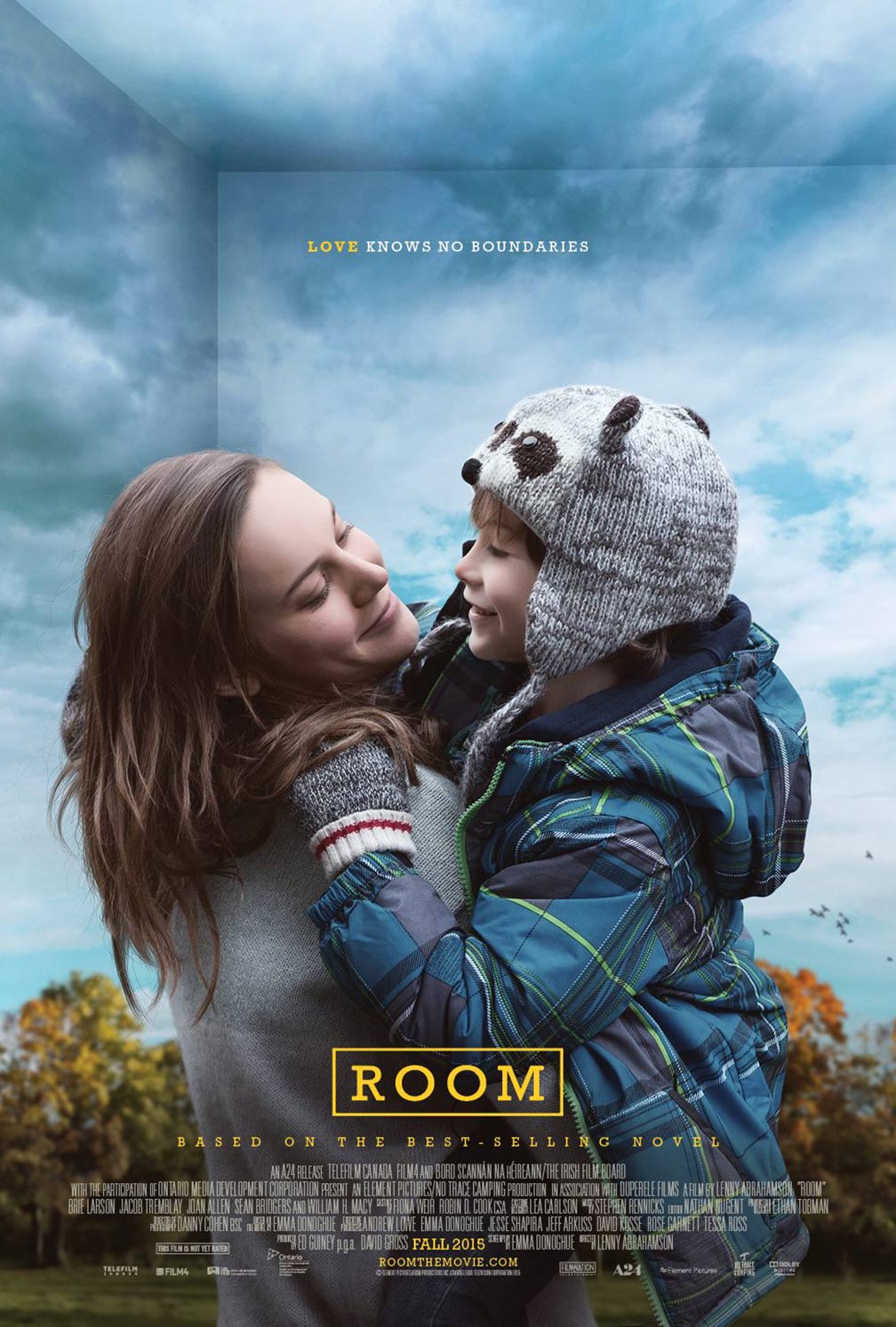
'Room' is a 2015 drama, which briefly displays elements of a thriller in parts of the film, the film is directed by Lenny Abrahamsson who also directed 'What Richard Did' which is one of my key case studies for 'living with crime', this film also fitting into that category, as well as   possessing many similar characteristics to 'What Richard Did' due to Lenny Abrahamsson being an auteur and his distinguishable techniques being evident in both films. The film includes themes of violence, love, imprisonment, isolation and freedom as we watch protagonists Ma (Brie Larson) and Jack (Jacob Tremblay) in an extraordinary story told in the form of a linear narrative structure, the devotion and dedication Ma has for Jack as she continues to create and sustain the universe she has created inside 'Room' is evident due to the outstanding performance of both actors through out the film. This creates a realistic/believable relationship between the two characters, resulting in a heartfelt experience for the audience as we see Jack's normality settle in the confined space which Ma euphemistically named 'Room'. When comparing 'Room' to 'What Richard Did' I personally think there is a commonality in the subtle approach Lenny Abrahamsson takes to both stories , in both films an event/events takes place which may be displayed dramatically in many modern films, instead Abrahamsson focuses on the reaction of characters which in my opinion is just as effective as showing the horrific events in grotesque detail. As protagonists in both films accurately portray the various emotions felt in the reaction of the event, meaning the event can be delivered in a more realistic viewpoint for the audience , which could also be more effective as the incident feels more real as the grim nature of the event is shown accurately visually as well as emotionally without unnecessary gore in most cases. 

Brie Larson had an outstanding performance in the film, consequently leading to her winning an academy award for best actress of the year for the film. Her determination and dedication to the trade was evident in her preparation for the film, previous to the film she prepared by staying in the darkness of her apartment as well as loosing weight, this resulting in her being able to accurately portray the character we see in the film visually, as well as delivering an excellent performance as Ma. I thought this added to the already grim realism displayed in the film as it was evident that her character (Ma) would go to any extent in order for Jack to live a life as normal as possible, even in the shocking circumstances they were under her hope was displayed through the clever choice in the various micro features, but ultimately her performance was key in portraying the love and dedication Ma felt for Jack in 'Room'.  

Wednesday, 24 February 2016

What Richard Did - Weekly Film Analysis


'What Richard Did' is a 2012 drama directed by Lenny Abrahamsson, the film follows protagonist Richard Karlsen (Jack Reynor) as we get an insight into the life of well respected rugby captain Richard, the undisputed alpha male of a privileged set of South Dublin Teenagers. The film explores themes of love, friendship, greed, guilt and regret as we watch Abrahamsson's subtle approach of exposing a boy who turns out to not be who he first believes he is after a devastating incident. I personally thought quite sound and a clever use of cinematography being used through out the film resulted in the audience almost feeling uncomfortable due to us feeling like we are encroaching on his very normal day to day life, which we are. Abrahamsson may do this in order for the protagonist (Richard) to seem very relatable to the audience as we watch his very normal everyday life over the span of a summer. Until one unexpected event that may be looked over as nothing by many people causes devastation among his friends and family, as well as his own mind , he begins to doubt who he truly is providing the audience with a thought provoking experience due to everything in the film seeming so subtle and un dramatic when really the seriousness of the situation completely juxtaposes to what we are seeing/feeling from whats up on screen. 

This film can also be linked to a number of my case studies , this due to it being a film exploring the 'living with crime' topic, which is evident a number of times through out the film, also classifying as a British film and having a lot in common with almost all my case studies, the most obvious being the commonality they share in a young teenage protagonist.  'The Selfish Giant' , 'Fishtank' and 'What Richard Did' were also all distributed by British film distributers; 'Artificial Eye' , who specialise in the distribution of independent and art house films. This film could definitely be a good example in future work surrounding my case studies due to the commonality in distributers and directors. Lenny Abrahamsson's originality as an auteur is clear after seeing more than one of his films, often subtle euphemisms are taken providing the films with a more interesting/relatable narrative as situations often become ambiguous due to him purposely approaching a particular problem or incident a lot less dramatically than seen in many hollywood blockbusters, leaving the audience thought provoked as the mystery within the film/character gradually unravels. 

Tuesday, 23 February 2016

Inglorious Basterds & Miracle at St.Anna - Compare & Contrast


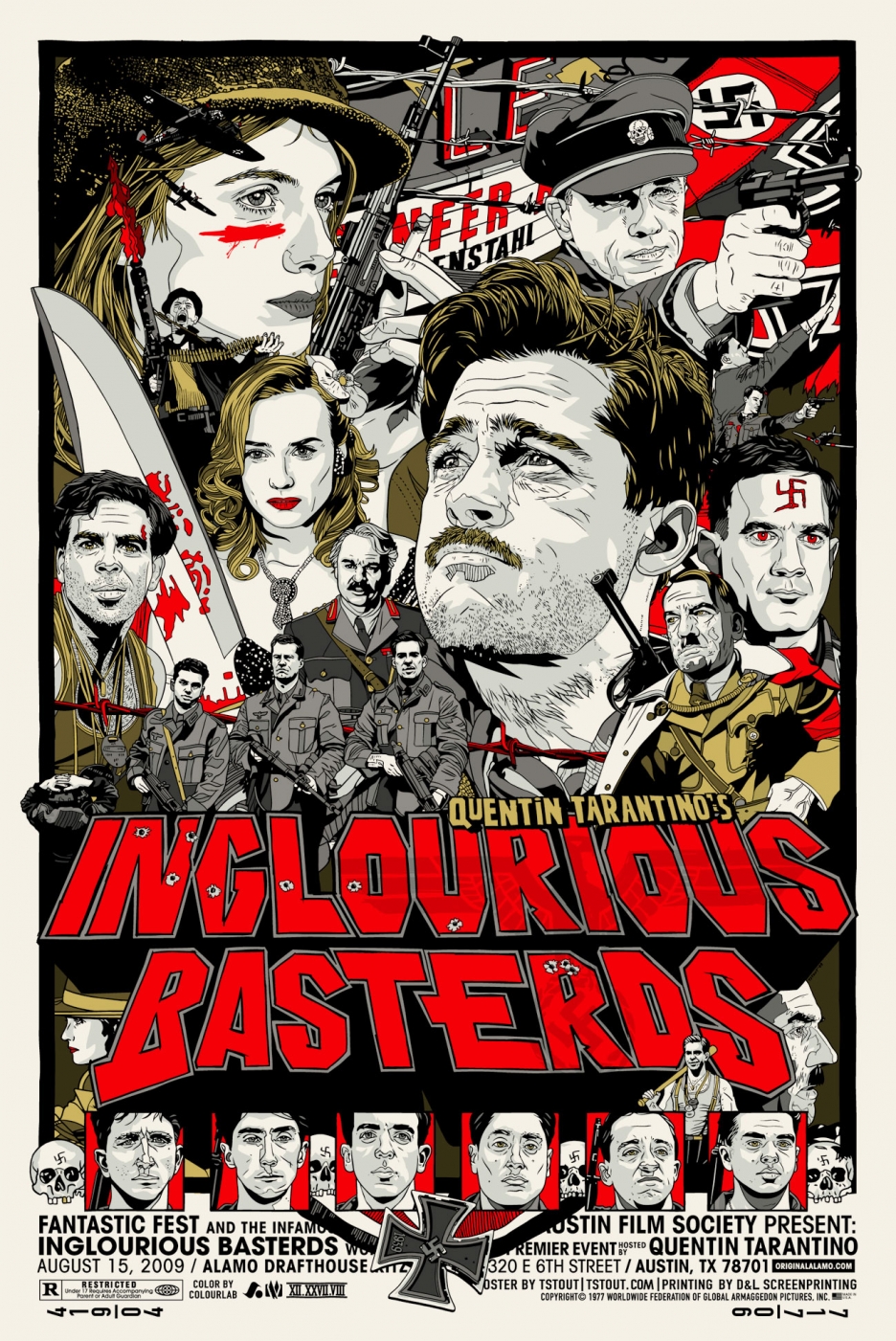
'Inglorious Basterds' is a 2009 action/comedy film written and directed by Quentin Tarantino, the film follows a multi protagonist vigilante group of jewish men and women named 'The Basterds' as they seek revenge on Nazi's during the WW2 time period. The themes displayed in Inglorious Basterds include violence, revenge , and war, despite the film being about a serious topic matter in WW2 ( the mass slaughter of Jewish people ), in true Tarantino style comedic elements are placed in the individual characters through out the film in order to make this film unique to many other classic war films, each of the characters in the film contributing to the grand finale where the true horrors of war are shown in the form of an on screen blood bath. With a production budget of $75,000,000 and a profit of $325,000,000 worldwide the film was a massive success. Tarantino's first war film was well received by its audience as his brutal story featuring the group of Jewish vigilantes clearly appealed to many people as the dramatic violence inflicted on many Nazi's in the film may be seen as well deserved after the utter devastation they caused many people during WW2. 

'Miracle at St.Anna' is a 2008 action/crime drama directed by Spike Lee, this film takes a different approach to the horrors of WW2 as a much more realistic display of War is shown (due to the narrative,violence and characters) after a group of African American Soldiers (known as the Buffalo Soldiers) are ambushed by Nazi troops, consequently ending up fleeing to and becoming trapped in a small Italian village in the year of 1944. The film explores themes of prejudice, survival, loss and war as we view the 'Buffalo Soldiers' attempt to keep their lives after becoming outnumbered and surrounded by the unforgiving nazi troops. With a production budget of $45,000,000 the film was clearly not as well received as it only achieved a profit of $9,000,000 worldwide, many audience members and  critics put this down to its unclear narrative as the non-linear structured film features episodes of war at different time periods possibly leading to confusion among audience members.  

It is very clear having watched films from both directors including these two that they are both auteurs in there own right due to there films being recognisable, distinguishable techniques and characteristics of their films make ever film made personal to them.
Obvious comparisons of the two films can be made immediately as they both focus on particular events (fictional and non fictional) that accurately display the unforgiving brutality of the Nazis in the time period of WW2, consequently leading to a strive for revenge in the characters featured in both films. The awaited revenge in both films is also centred around characters of particular ethnic groups (African American men in 'St.Anna' and Jewish men and women in 'Basterds'), this element making both films unique as the perspective of both ethnic groups is not usually explored in this way (revenge narrative) in many war films. Other elements such as the use of foreign language becomes evident when watching both films. Also the clear display of violence is used in both films in order to accurately display the brutality of the Nazis through out WW2, I think gore (which Tarantino is well known for) is dramatically used in his fictional interpretation of revenge in WW2 in order to create a glorious victory for the Jewish vigilantes featured in the film, as the onslaught of Nazis is displayed in this fictional take that many people will enjoy due to the harsh reality of this particular war resulting in the complete opposite for many people (in particular Jewish) in the historical event of WW2. Spike Lee approached the factual event of the horrific onslaught of many Italian people by the Nazis in a different manner, visuals in the film were more realistic as he accurately portrayed the fear of the people, and the dominant brutality many Nazis possessed as they continued to slaughter the people outside a church in the town St.Anna.Differences in the films were evident due to budget of 'Inglorious Basterds' being around $40,000,000 larger than 'Miracle at St.Anna' , this leading to less effective/realistic action sequences displayed in the lower budget film, possibly resulting in its small turnover in comparison to the large success gathered in 'Inglorious Basterds'.